

4.33 years on Entyvio for my Ulcerative Colitis
From Failure to Gratitude: Therapy, Mindset Transformation, and Embracing Growth

This post, and others that are as intimate, are typically locked for paid subscribers. If you want to hear more from me on real life, new recipes and video tutorials, I’d love to have you subscribe.
30 infusions.
About 100 pokes.
4 years and 3 months on Entyvio.
3 years, 8 months of clinical remission.
1 year, 4 months until 5-year remission.
But who’s counting?
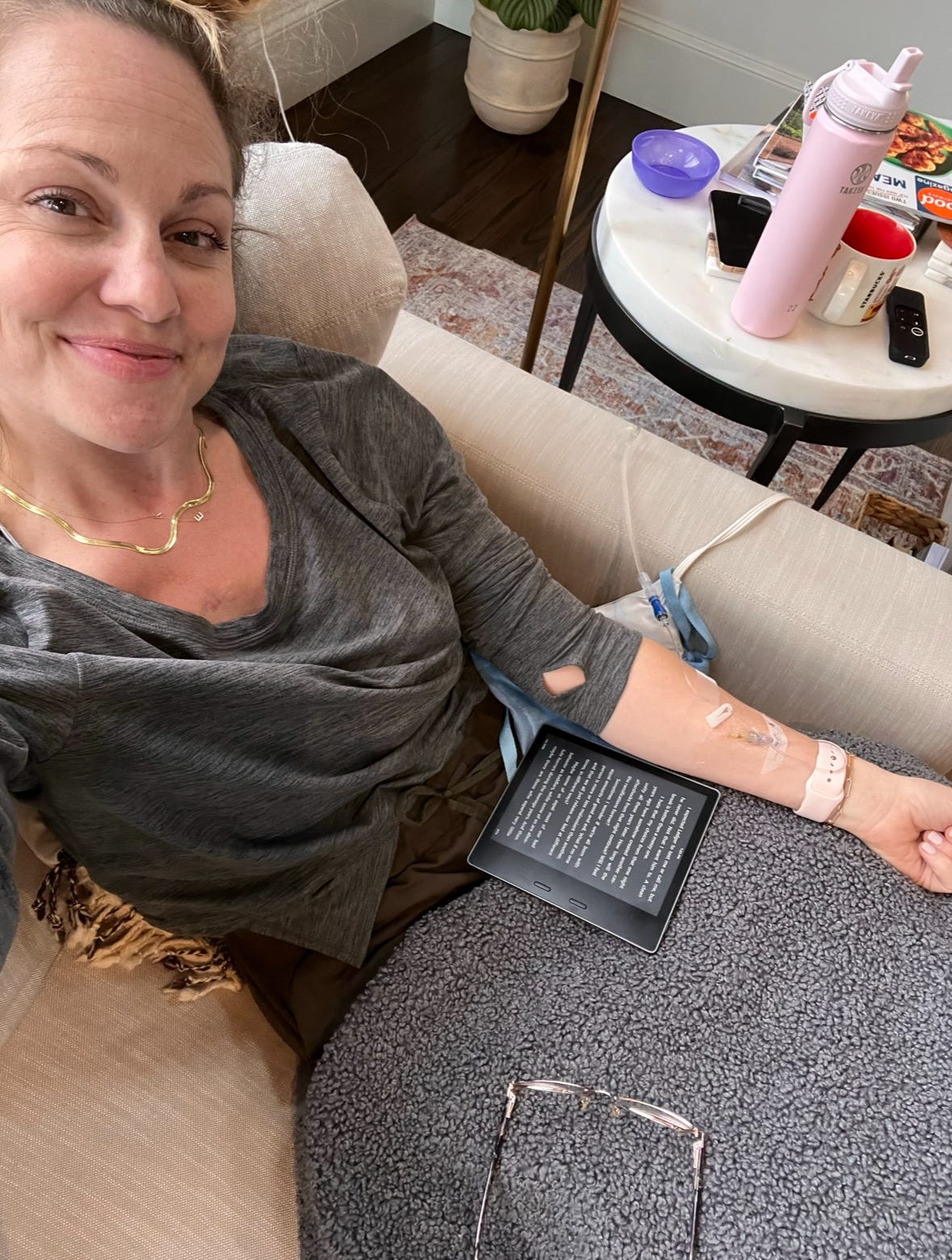
How is it possible that four years have already gone by? I’ve been meaning to write this update for so many years, but wasn’t sure where or when to share it. Additionally, it’s taken four years to get acclimatized to the fact that this medication is not a symbol of defeat or something to fear, rather, it is a life-restoring tool.
I say that, and have gone through a lot of counseling for that purpose, but still feel feelings of failure or imposter syndrome creep up when I read your testimonials like you shared on our Roll Call post. So many of you thank me for helping you get off of medications and put your autoimmune disease into remission, but yet - here I am writing a post about being thankful for medication.
For those of you who want to trace my voyage towards deciding to initiate this treatment plan during my hospital stint in 2019, you can dive into the final chapters of my book, Food Saved Me : My Journey of Finding Health & Hope through the Power of Food. It was basically life or death, but there’s a lot of variables that led up to it, so I hope you’ll take a moment to give it a read! It’s on audible as well.
This update is for those of you who followed my journey since, and have been waiting to hear where I am now. Or those that are on similar medications, searching for a more positive perspective.
Here’s what I’m writing about today, but I have a feeling this will be a two or three part email update after you leave questions in the comments.
Anxiety, dozens of pokes, and failed infusions
Reclaiming My Life and Motherhood
Transition to Home Infusions: A Game-Changer
Reducing Side Effects and Stress
Finding Remission with Dietary Adjustments and Medication Synergy
Looking Ahead with Gratitude and Continued Growth
Anxiety, dozens of pokes, and failed infusions
After I was released from the hospital in November 2019, and after the initial, more frequent “loading doses” of Entyvio, I made my recurring drive to the Oncology Center every eight weeks full of anxiety.
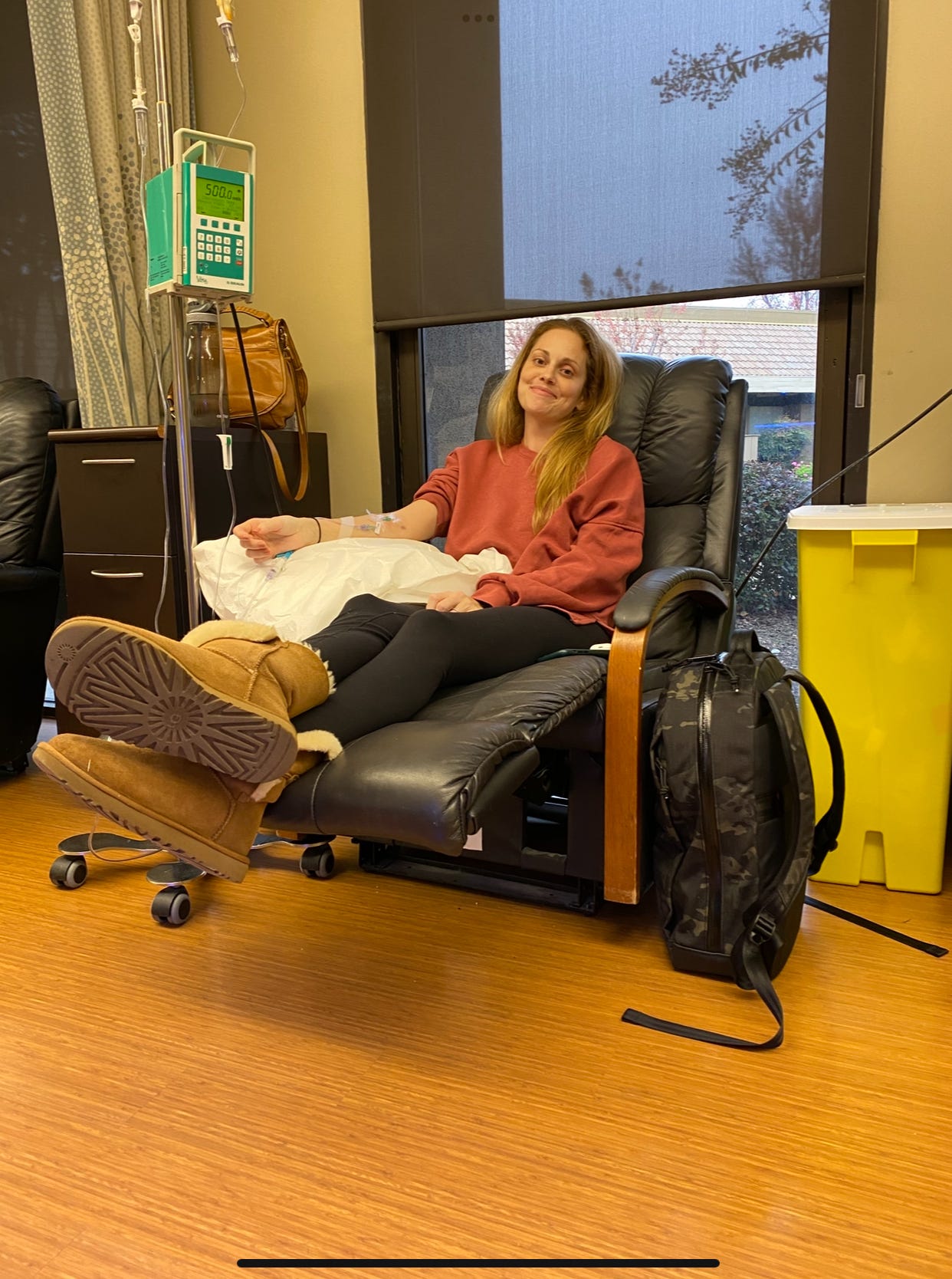
The stress levels would peak with every subsequent treatment, particularly during 2020, when the repercussions from my flare-up hadn’t quite subsided and I was heavily under the influence of potent immunosuppressants - prednisone. The emotional support of Ryan was invaluable as he would accompany me through every session, easing my discomfort as the needles tried their best to navigate my notoriously difficult veins.
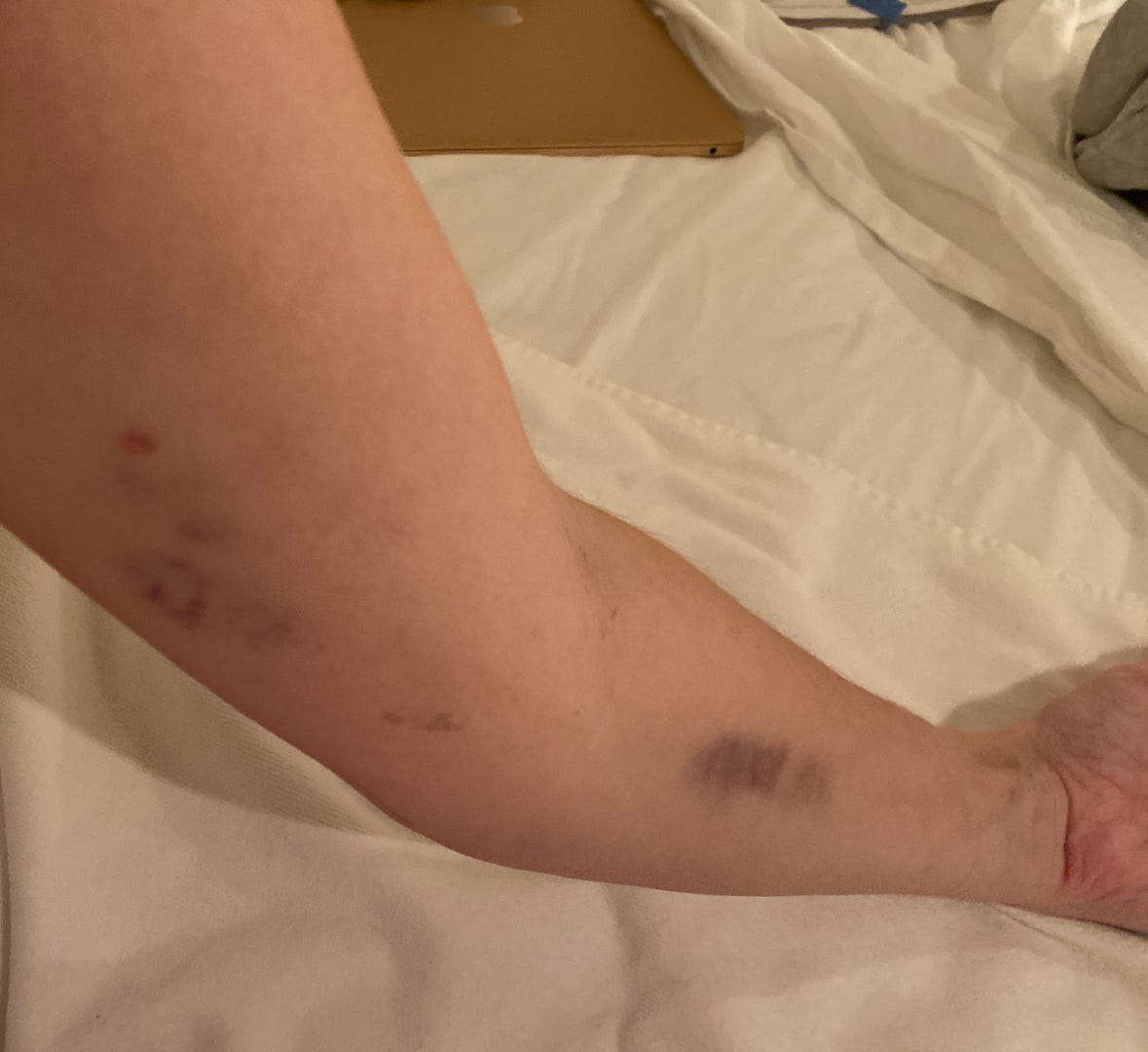
Once the rules disallowed visitors, I had to face these arduous sessions alone. After enduring 6 to 8 attempts of poking, prodding and digging into my veins, anxiety became a faithful companion during every single treatment. There was more than one occasion where I had to leave and come back another day because we couldn’t get the IV started.
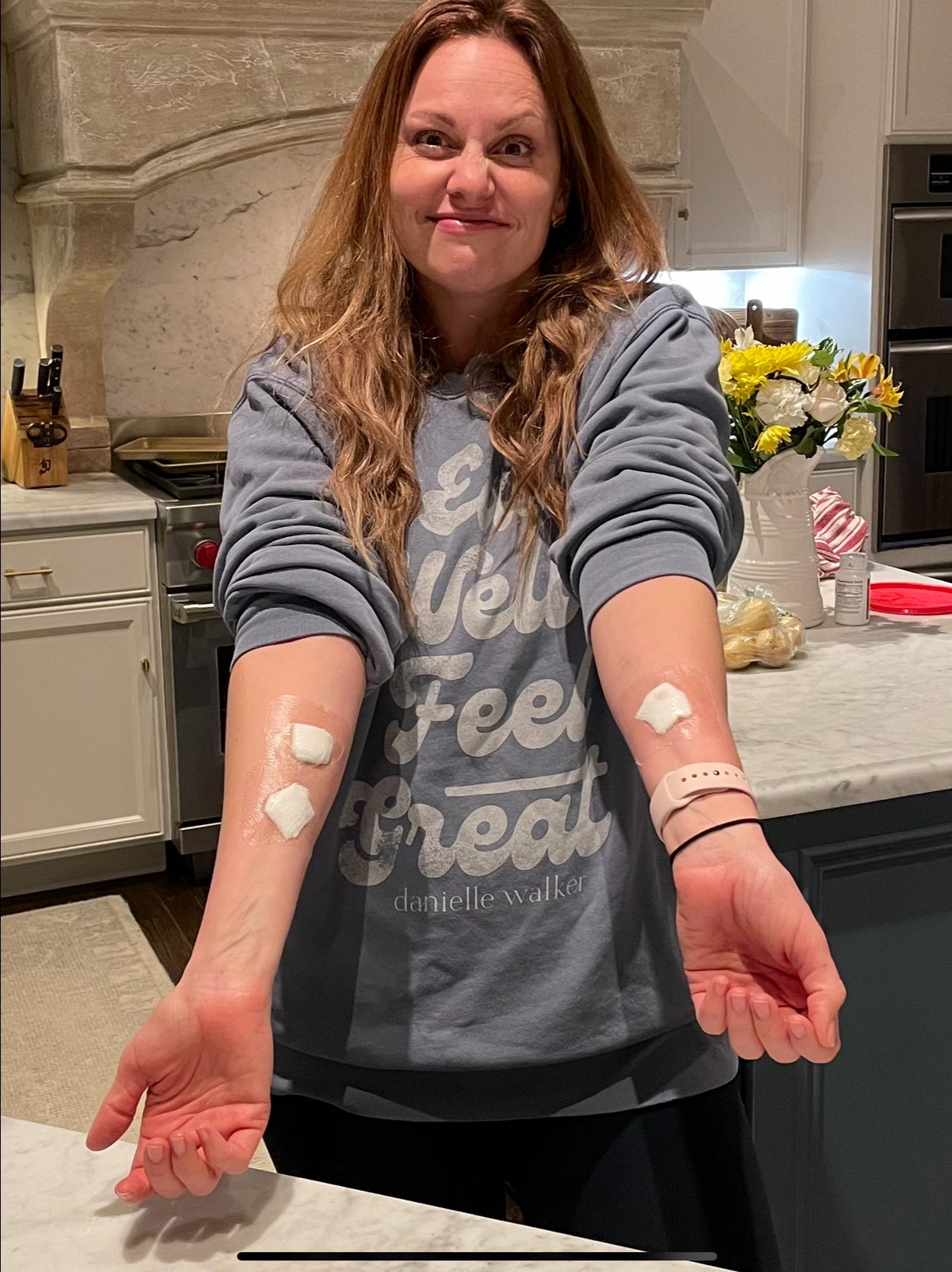
However, the silver lining in the cloud was that the medication avoided any additional burden by not inducing many side effects. I mainly just felt exhausted for 2 days after, but more to come on how I rectified that below.
It’s taken a lot of processing (and therapy!) to look at this medication in a positive and peaceful light. I had to work really hard to train myself to remember that in avoiding immunosuppressants for over a decade, I essentially gifted myself invaluable time until a compatible medication became available.
Reclaiming My Life and Motherhood
Topping the list of my reasons to be grateful is the freedom this medication has granted me to reclaim my life. It has liberated me from constant vigilance and introduced an element of peace to activities that filled me with apprehension before.
It has give me back so much of my life that I often times didn’t realize was stolen by my disease. I can go to a baseball game doubleheader, and not be anxious the entire drive down or worried about missing a home run while running to the bathroom. I can spend valuable time with my teenager in the car on a 6am drive to a game, where I formally would have defaulted to Ryan taking him so I could sleep (and morning tummy is a thing for me). I can make a drive to the mountains with my family and not be glancing at every single exit ramp for a clean starbucks or In-n-Out (UCers know where the cleanest and most easily accessible bathrooms are. If you know, you know).
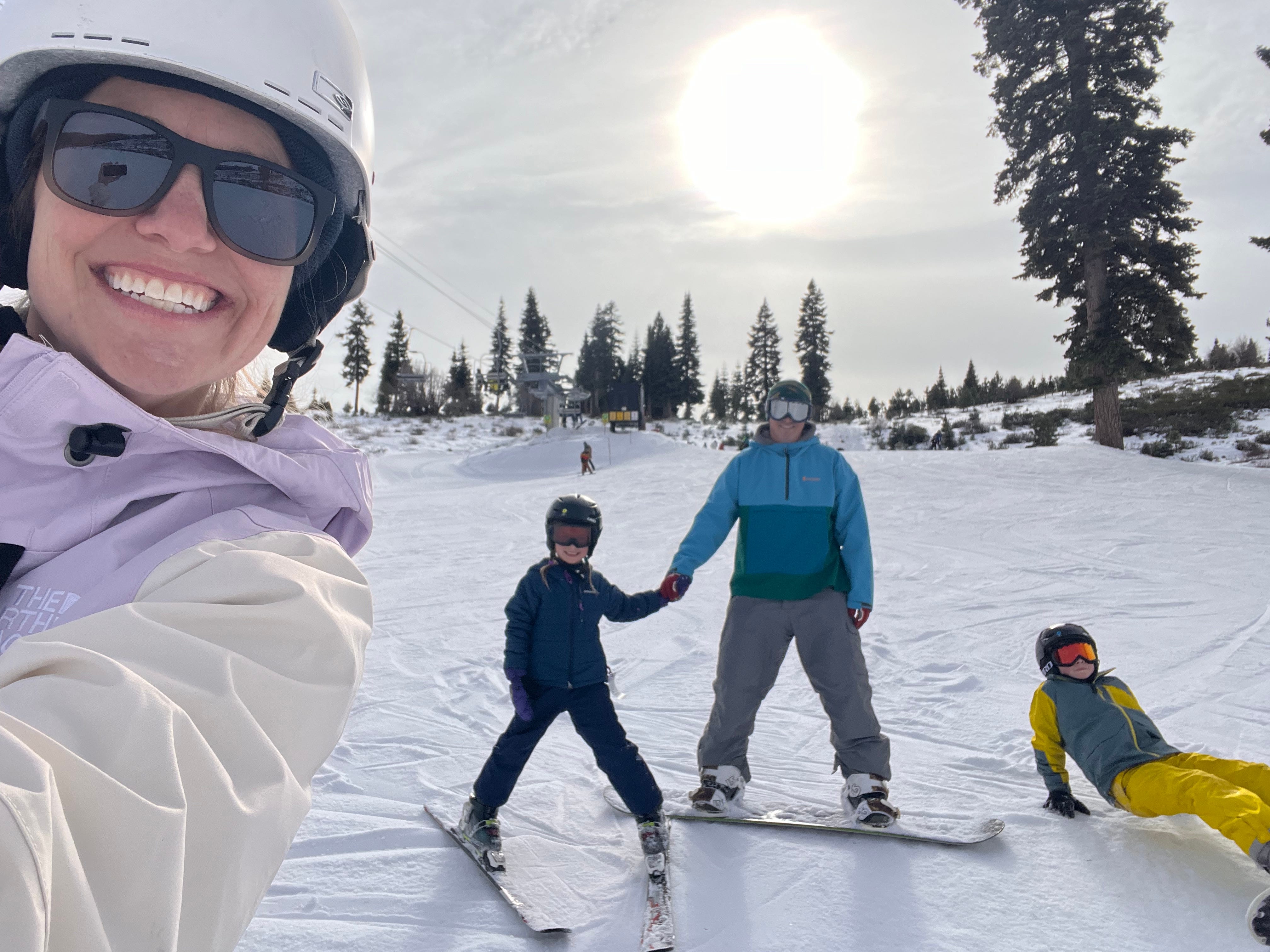
Just this January, we took our kids skiing for the very first time. There was not a single moment on the mountain where I was anxious about my disease. A thing that would have been unheard of before. In September, Ryan and I woke up at 4:30am for a hot air balloon ride in Napa, something that I wouldn’t have even entertained four years ago - early mornings were never a good thing for my gut, and a balloon in the ski for 2 hours without a bathroom was a non-negotiable.
I’m thankful that I can go out to dinner, or fly on an airplane, and not have a piece of my brain on alert that if I got a little bit of gluten in something I ordered by accident. Or that ingesting too much dairy and sugar in sauces or dressing while on vacation could land me in the hospital. I’m thankful that the stressful year I had in 2022 in my personal life and in my work life did not send me into a flare up, which it 150% would have a few years ago.
I’m thankful that the daily stress that I was under for over a decade has been virtually diminished for nearly 4 years.
Transition to Home Infusions: A Game-Changer
Despite this improvement, one stressor persisted every eight weeks. And that was the infusion itself. Or rather the starting of the IV as mentioned previously.
Although the fault squarely lay with my elusive veins, the sight of me would send the nurses at the Oncology Center into hushed murmurs, wondering who would take on the daunting task. Sometimes, it was a collaborative effort of two or three to successfully insert the needle.
So, I proposed the concept of home infusions to my G.I specialist, a concept I ardently opposed earlier. My reluctance was mainly based on the fear of converting my home into a treatment center and burdening my kids, especially Asher, who had a deep-set fear of witnessing me hooked up to medical equipment from the hospital stays he witnessed over the years. But I also worried it would be far out of budget.
I was pleasantly surprised to discover that some insurance providers are more inclined towards in-home treatments and they might even be more cost-effective. Subsequently, I applied and got the treatment covered completely by my insurance.
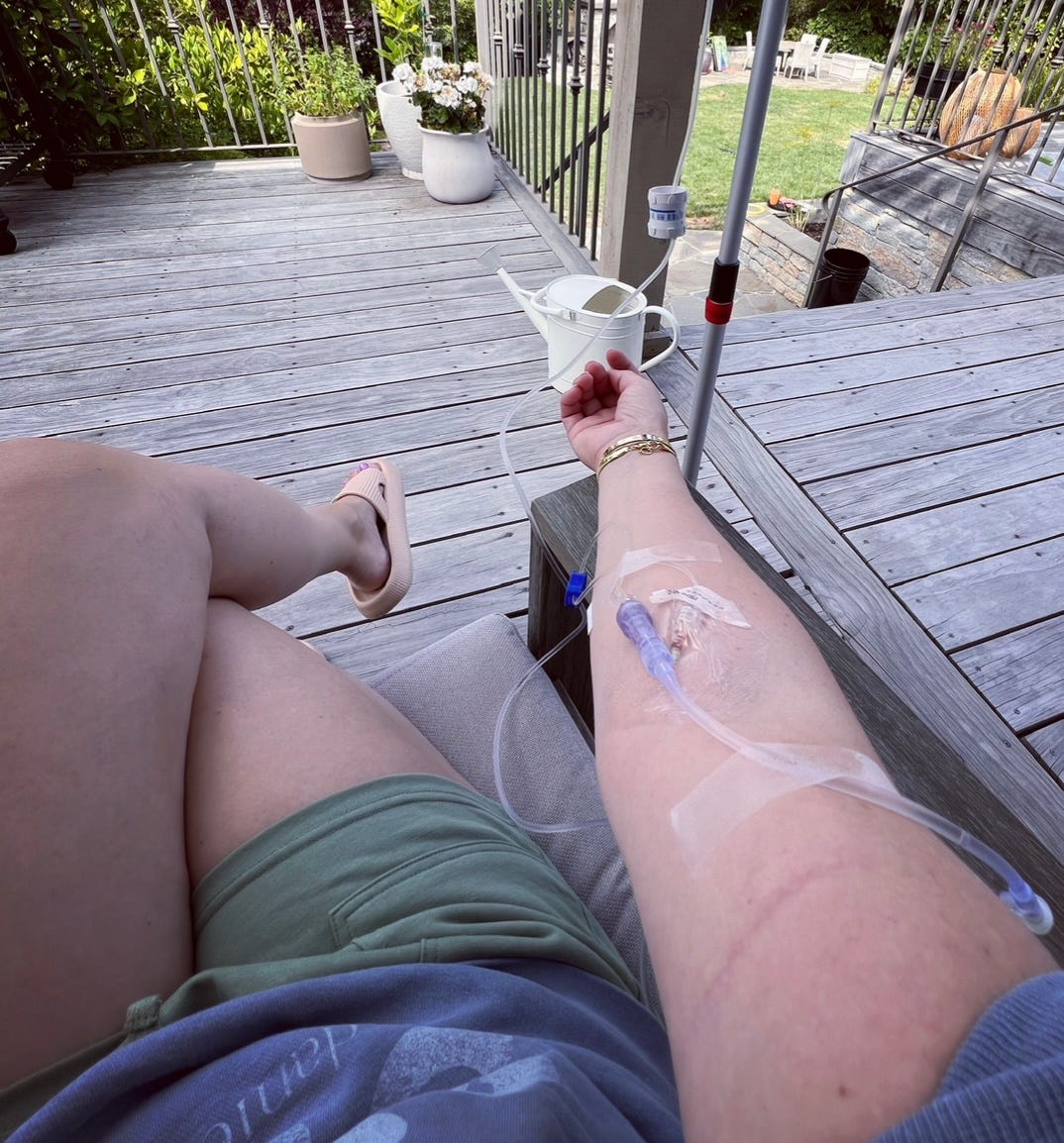
I managed to schedule my first home infusion in January of 2023 when the kids were at school. I am filled with such relief to be able to announce that it’s been an absolute success and I’ve been receiving them every 2 months from the comfort of my home for the past year.
The soothing environment of my home, coupled with the comforts that it provided - warm mugs of broth, a heating pad, a good book, and a snuggly dog and blanket - worked wonders in calming my nerves and injecting peace into the process. My incredible nurse Kristine has, without fail, found my vein on the first poke, and I haven’t even had any bruising afterwards.
Reducing Side Effects and Stress
Previously, post-infusions left me bedridden for a day, sometimes two, largely due to the fatigue from the stress of heading to the infusion center. I couldn’t schedule any meetings, travel, or school volunteering for a buffer of 3 full days to be safe. But since transitioning to at-home treatments and adopting strategies to manage side effects, things have really improved. Now, I don’t feel any inconvenience, I even immediately did a tough 60-minute Peloton tread bootcamp after my latest session. Jess Sims is no joke so I’m pretty proud of my body for that!
To tackle fatigue during infusions, I focus on hydration, bone broth, and a really clean and healthy paleo diet beforehand.
For water, I aim for at least 65 ounces of water daily, three to five days before the infusion, and a ton the morning of. No coffee. Yes I pee nonstop. 😅
I also drink bone broth, aiming for three mugs a day, two to three days before, on the day of the infusion, and a couple of days afterward. Asking for an extra bag of saline during the infusion helps too.
It’s still a long process, about 2 hours every time after I get all of my equipment ready and medication to room temperature before she arrives, but significantly less than going to the oncology center - it used to be about 6 hours out of my day.
In terms of my overall well-being and holistic health, the at-home approach is undoubtedly the right choice. Through this journey, I've come to understand that any form of stress relief—whether it's physical, mental, spiritual, or emotional—plays a pivotal role in reducing inflammation and managing my disease symptoms effectively.
While I understand that everyone's circumstances vary, I felt it was important to share my experience in case it resonates with someone in a similar position. I also feel compelled to remind you, if you're exploring various approaches—whether it's diet and supplements alone, or in combination with medication—and you're not seeing results, it's essential to reassess.
Finding Remission with Dietary Adjustments and Medication Synergy
After placing my full trust in Entyvio during my hospitalization and subsequent months into 2020, I loosened my diet and tried to gain weight and strength again by eating a lot of comfort foods that I previously avoided.
Real talk : I ate 12 pieces of toasted Udi’s gluten-free white bread a day with grass-fed butter and no sugar added jam most days as well as my kid’s GF Perdue chicken nuggets, Alexia fries, and lots of yogurt. That doesn’t sound all that bad when I type it out, but I know my body does not like grains, xanthan gum, canola oil, dairy with lactose, and sugar.
Initially, the allure of Entyvio lay in its promise that I could eat without restrictions. I’ll admit, this promise played a role in my decision to start the medication during my hospitalization. After nearly three months of subsisting on soups, losing 40 pounds drastically, and a 12-day liquid diet, the mere thought of indulging in real food became a bit of an obsession during my wired, sleepless Prednisone-high nights. I practically hallucinated for the day when I could enjoy foods I hadn’t tasted in over a decade without suffering the consequences.
However, I also grappled with the knowledge that a paleo, anti-inflammatory diet could benefit everyone, regardless of their medical condition.
Despite my initial hopes, ten infusions in 2020 failed to bring me to remission. My doctor still had me on high doses of Prednisone because my inflammation levels were still far too high. I wanted off of it more than anything because the side effects were crippling for me, so I made the decision to return to what I knew worked.
It wasn’t until I returned to my anti-inflammatory, paleo-style diet that I began to see significant improvements in my health. I noticed a notable enhancement in the effectiveness of the medication, leading to my achievement of full remission around July 2020. It dawned on me that by consuming inflammatory foods while receiving infusions of a medication designed to reduce inflammation, I was essentially undermining its effects.
Looking Ahead with Gratitude and Continued Growth
Looking ahead, I'm uncertain what the next few years will look like, but I remain hopeful that advancements will offer better alternatives to my current medication. It is my goal (in working with my GI) to make my way off of this medication at my 5-year remission mark, but only time will tell and I’m holding it loosely. I constantly geek out reading about the studies that are being done on the microbiome, and really do believe we’ll have a cure at some point. I’m still holding out hope that fecal matter transplant (FMT) will be approved by the FDA for UC and Crohn’s. I’ve also read some interested articles on “inverse vaccines” and stem-cell transplantation.
Right now, my top priority is to be present, active, and healthy for my children and for Ryan. Reflecting on over a decade of managing this disease without hospitalization, as well as the painful lessons we learned from 2019, I've realized the toll that stress took on me. Whether it was during childbirth, coping with the loss of our daughter Aila, grief from losing loved ones or our dog Ahavah, or other life challenges like work disappointments and the stress of raising a teenager (yikes), attempting to manage my severe illness solely through natural measures strained not only my body but also my relationships, marriage, and journey through parenthood.
Each experience has added another valuable tool to my toolbox, contributing to my overall well-being. They all work together harmoniously for my optimal health, and for that, I am deeply thankful.
I’d love to hear from you in the comments. What strategies have you found most effective in managing stress and anxiety during medical treatments, and how have they impacted your overall experience?
D
Thank you so much, Danielle, for reminding us that Western medicine and more natural, self-sufficient wellness can be an “AND”; it doesn’t have to be an “OR.” Your vulnerability continues to help and heal.
Thank you, Danielle, for sharing your journey. I appreciate your voice, your experiences, and your vulnerability. I had my colon removed 25 years ago and have lived with an ileal-anal anastomosis with J-pouch. It's been and continues to be a journey that keeps me constantly holding the tension of opposites.